Template L-Shape Corner Radius Calculation
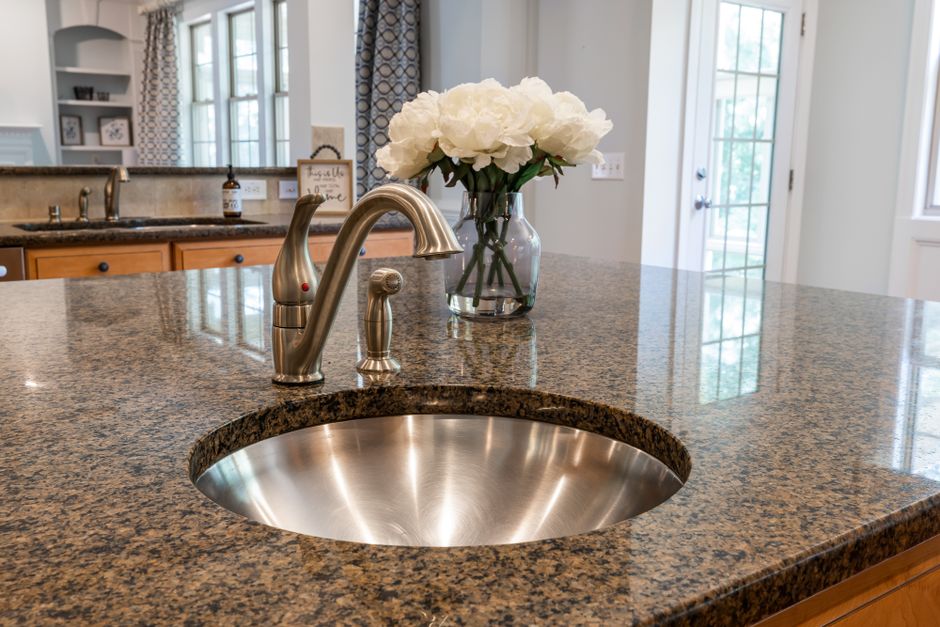
The waste is forty dollars. The margin on a granite slab is thin, and the precision found in the measurements at buncombe county custom countertops nc college binge drinking prevents the loss of a whole piece of stone in Buncombe County, NC. Every countertop requires a rigid math approach to ensure the corner radius does not cause binding during the fabrication stage.
Calculating the Pivot Point
A corner radius must account for the thickness of the tool bit. If a template shows a tight radius, the physical cutting tool might bind if the pivot point is not offset. For an L-shape, the vertex is not the center of the arc. The center of the radius sits inward from the intersection of the two straight edges. If the radius is two inches, the center point sits exactly two inches from each intersecting edge. This math stays the same whether the material is quartz or marble. A mistake of even a sixteenth of an inch leads to a corner that is too sharp or a seam that will not close properly.
Material Constraints and Tooling
Hard materials like quartzite or porcelain demand a different approach to speed and pressure. A digital template provides the coordinates, but the mechanical reality of a CNC machine or a handheld grinder introduces variables. If the radius is cut too deep, the edge profile will not match the rest of the run. When working with a butcher block or laminate, the grain direction affects how much force is applied near the corner. The pivot must remain stable to prevent a chip-out. A chip-out on a high-end slab often results in using a remnant instead of a full piece.
Managing the Seam Placement
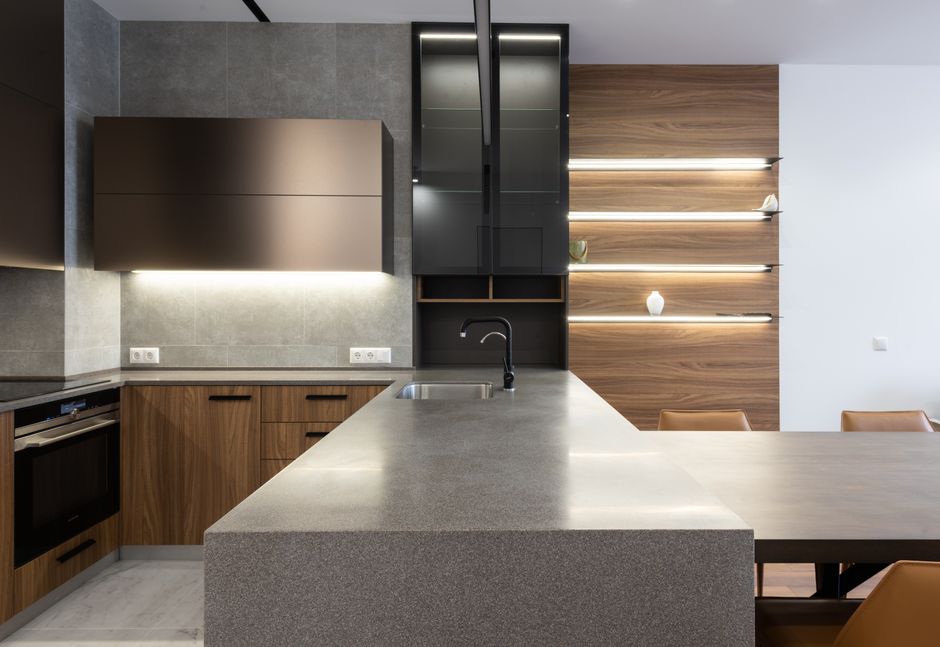
The L-shape corner is a high-stress area. Placement of a seam near the radius can cause structural failure if the support is insufficient. A seam placement that avoids the corner radius is often preferred to maintain the integrity of the stone. If the corner is part of a waterfall edge, the radius must be perfectly perpendicular to the floor. Any deviation in the pivot point will result in a visible gap where the vertical piece meets the horizontal surface.
Edge Profiles and Overhang
The overhang dictates the final boundary of the radius. An eased edge or a bullnose profile adds physical mass to the corner. The calculation must include the depth of this profile. If the radius is calculated only on the base template without accounting for the edge profile, the tool will strike the material too early. This causes the cutter to jump, ruining the smooth arc. Every cut requires a check of the depth of the overhang against the radius arc to ensure the geometry holds.
Final Verification of the Cutout
A sink cutout near a corner radius complicates the math further. The distance from the corner to the edge of the cutout must be measured twice. If the radius is too large, it encroaches on the sink cutout area. This creates a thin point in the quartz that is prone to cracking. The geometry must balance the corner radius and the sink cutout to maintain a solid strip of material between the two features.